
Home › Grieving Resources › Grief Support Services › How to Clean a Headstone
The Safe Way to Clean a Gravestone: What Works on Granite, Marble and Bronze, and What Etches Them for Good
The stone looked worse than you remembered. A dark film over the name, green creeping into the letters, and a date you had to trace with a finger to read. So you went to the garage, found the bleach and the stiff brush, and stood there for a minute, unsure.
That pause is the most valuable thing in this guide. Cleaning a headstone is not hard, but the wrong bottle can etch a granite face, dissolve the surface of marble, or strip the patina off bronze, and none of that comes back. The method below is the one the National Park Service teaches its own cemetery crews and the one the VA National Cemetery Administration publishes for veteran markers. It is slower than bleach. It is also the reason a stone cleaned this way is still readable fifty years from now.
To clean a headstone safely, soak the whole stone with clean water, spray on a biological cleaner such as D/2 or PROSOCO ReVive, brush gently with a soft natural-bristle brush from the bottom up, rinse until the water runs clear, and let sun and rain finish the job over the following weeks.
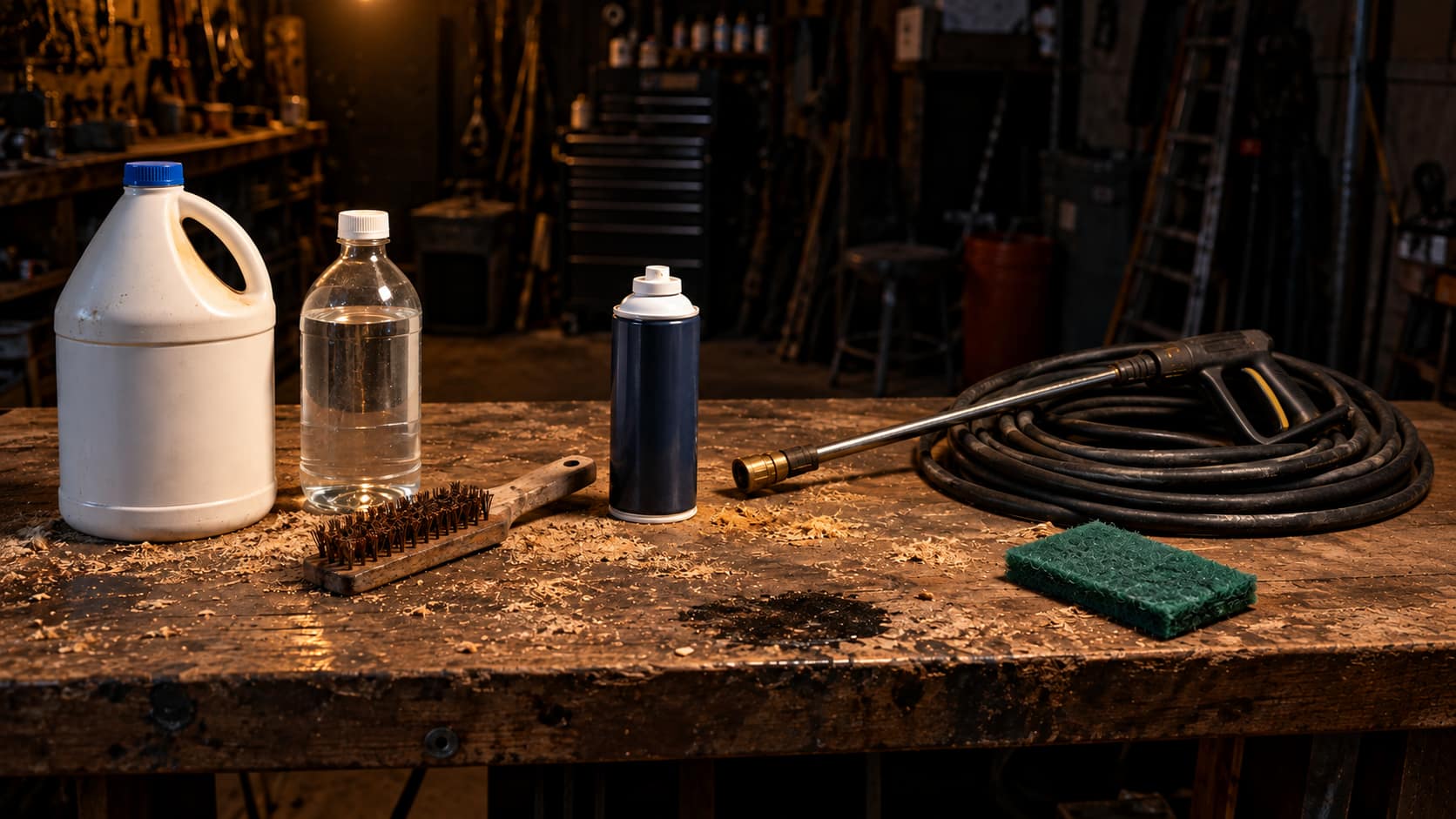
- Never use: Bleach, vinegar, pressure washers, wire brushes, or shaving cream, all of which etch or split the stone.
- Granite: The most forgiving stone; rinse dark polished granite extra well to avoid white haze.
- Marble and sandstone: Soft and acid-sensitive; if the surface is powdery or flaking, apply cleaner without brushing or skip cleaning entirely.
- Bronze markers: Water and a soft brush only; no metal polish, lacquer, or wax.
- Hiring it out: A professional cleaning through Tending costs $139 for a flat marker and $199 to $225 for an upright, and the exclusive Memorial Merits Tending coupon code MEMORIALMERITS takes 5 percent off.
You will find the safe supplies, the six steps, how granite, marble, bronze and sandstone each change the approach, what to do about black crust and lichen, and an honest look at when a professional headstone cleaning service makes more sense than a Saturday with a bucket.
Before You Touch the Stone: Three Checks That Prevent Damage
Before any water goes on, spend two minutes with the stone. The National Park Service puts it plainly: the goal is to do no harm, and cleaning should never try to make a marker look new. Three checks decide whether you clean at all.
Is the stone stable?
Push gently on the top edge. A marker that rocks, leans, or sits loose on its base is a conservator’s job, not a cleaning job. Water and brushing add weight and movement to a joint that is already failing, and a tipping stone can crush a hand or a foot. If it moves, stop here and call the cemetery office. If the stone turns out to be past saving, the headstone cost guide covers what a replacement marker runs by type, and what the cemetery charges to set it.
Is the surface sound?
Run a dry fingertip across a plain area. If it comes away powdery, if the surface looks sugary or flakes at the edges, or if there are open cracks, the stone is losing its skin. The VA’s guidance is to avoid cleaning any headstone showing severe surface erosion or cracks. Leave those stones alone; a photograph and a call to a professional does more good than a brush.
What is the stone made of?
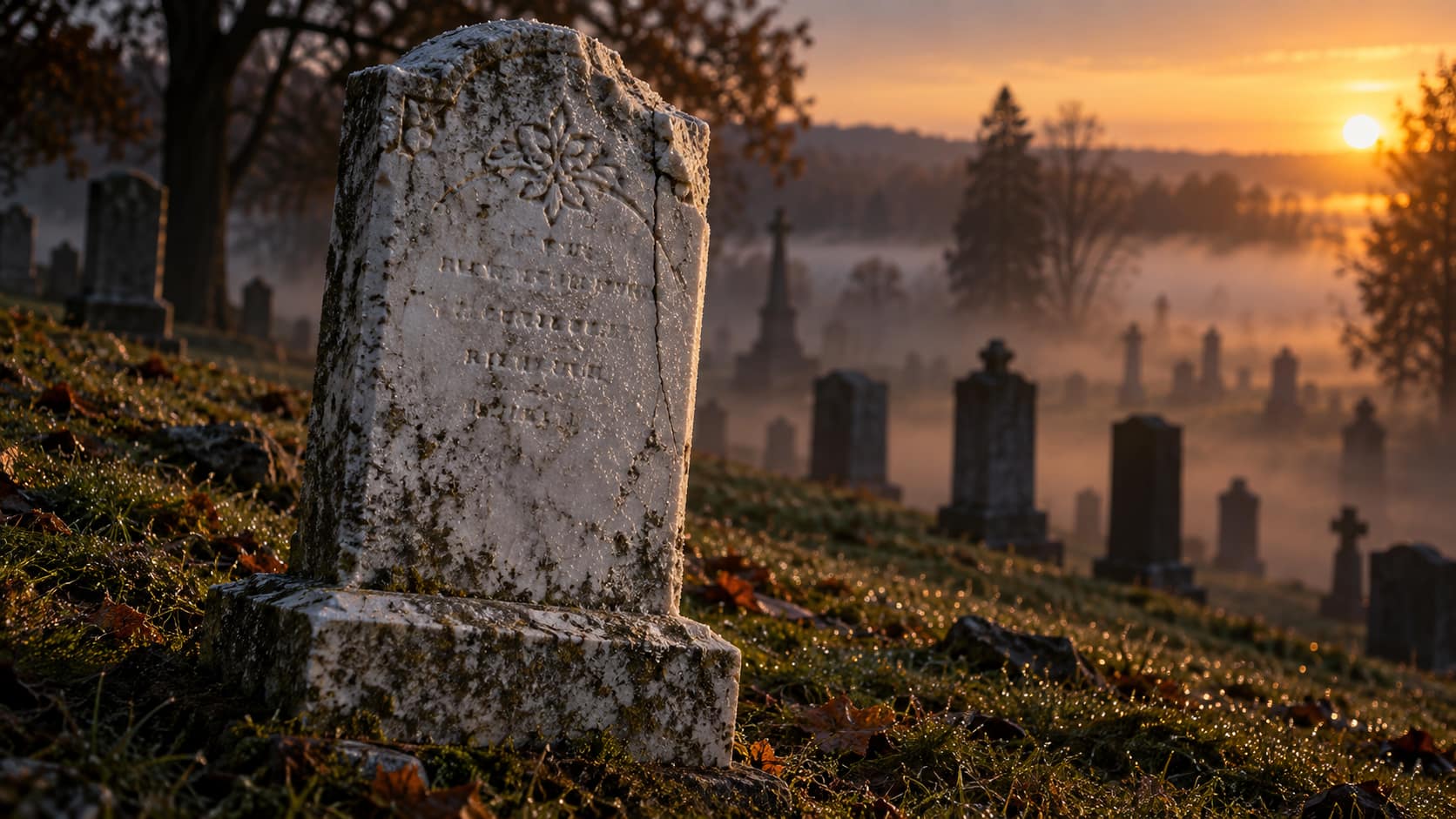
Granite is speckled, hard, and takes a polish. Marble is white to grey with soft veining and, on older stones, a chalky feel. Bronze is the flat metal plaque, usually set on a granite base. Sandstone and limestone are matte, earthy, and often the oldest markers in the cemetery. The material decides the method, so the section on each stone type below is the one to read twice.
What to Use: D/2, Biological Cleaners, and the Headstone Cleaning Kit Question
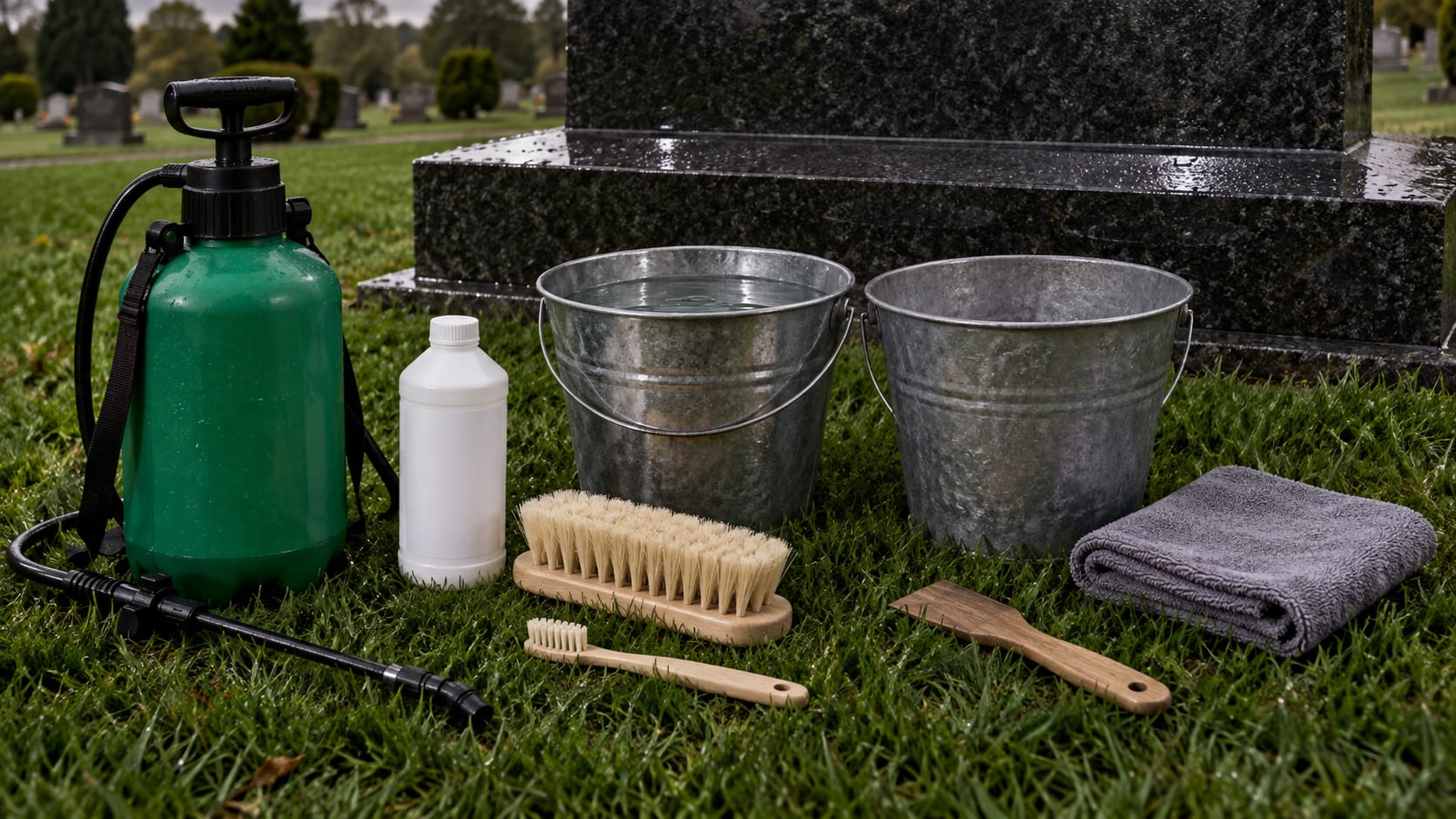
The entire safe method runs on three things: a lot of clean water, a soft brush, and a biological cleaner made for stone. That is the whole shopping list. Everything else in the cleaning aisle is a risk.
D/2 Biological Solution is the cleaner most conservators reach for first. It is the product cemetery preservation groups name first, and it sits on the VA’s published list of biological cleaners for government headstones alongside PROSOCO ReVive, Cathedral Stone Bio-Cleaner, and Wet and Forget. All four work the same way: they kill the algae, lichen and mold living in the stone’s pores, then let rain and sun finish the job over the following weeks. None of them bleach, none of them etch, and none of them need scrubbing to work. Expect to pay in the range of $20 for a quart and $40 to $50 for a gallon of any of them.
A soft brush means natural bristle or soft nylon. The VA specifies no plastic-stiff and no metal bristles. A large soft brush covers the face; a soft toothbrush gets into the carved letters. Add a plastic or wooden scraper for thick moss, two buckets, a spray bottle or garden sprayer, and towels.
The kit question. You can assemble all of that yourself from a hardware store and an online order for the cleaner. Or you can buy it boxed. The Headstone Helper kit ($89.99) packs a quart of PROSOCO ReVive (enough for three to five cleanings), a 4.5 liter pump sprayer, a spray bottle, a large nylon brush, a detail brush, scrapers, cleaning sticks for tight lettering, a kneeling pad, a bucket, towels, gloves and goggles into one backpack. The chemical inside is a VA-listed cleaner, which is why it earns a place here.
The kit makes sense if you would rather not source eight things separately, or if you are cleaning more than one family stone. If you already own the brushes and buckets, the $19.99 quart of ReVive on its own is the honest buy. Memorial Merits’ full Headstone Helper review goes through the kit piece by piece.
|
Everything in One Backpack
The Kit With the Cleaner the VA Lists
A quart of PROSOCO ReVive, a pump sprayer, soft brushes, scrapers, a kneeling pad, a bucket, towels, gloves and goggles, packed for the trip to the cemetery. Enough cleaner for three to five stones. $89.99, or $19.99 for the quart on its own if you already have the brushes.
Get the Headstone Helper Kit
Ships from Headstone Helper. See the full Headstone Helper review.
|
What Never Goes on a Headstone
Every product on this list has been used by a well-meaning family member, and every one has ruined a stone. The damage is not always visible the same day. Bleach salts keep working inside the pores for months; acid keeps etching marble long after it is rinsed.
Bleach and chlorine cleaners. Bleach drives soluble salts into the stone. As they crystallize they push the surface apart from the inside, and on marble and limestone the result is a rough, sugared face within a few seasons. The NPS and the VA both list bleach first among the things never to use.
Vinegar, lemon juice, CLR, and anything acidic. Marble and limestone are calcium carbonate. Acid dissolves calcium carbonate. A vinegar wash on a marble stone is a slow chemical sanding of the inscription. Acid also attacks the polished face of granite and leaves it dull.
Pressure washers. Even on low, a pressure washer blasts the softened surface of an old stone away with the dirt and forces water deep into cracks where it freezes. The VA’s equipment list reads “NO power washers” in capitals.
Wire brushes, stiff plastic brushes, steel wool, and scouring pads. They scratch granite, gouge marble, and strip bronze patina. If a brush would scratch your car, it will scratch the stone.
Shaving cream, flour, chalk, and any “reveal the letters” trick. Shaving cream leaves fats and glycerin in the pores that feed the very growth you are trying to remove. To read a faded inscription, use a mirror to throw raking light across the face, or take a photograph at a low angle in late afternoon.
Household cleaners and dish soap in quantity. Ammonia, degreasers, and most all-purpose sprays are strong bases or carry salts. If soap is needed for greasy grime, the VA names three that are safe in a bucket of water: Vulpex, Orvus, and plain Ivory liquid.
Sealers, waxes, and clear coats. Stone needs to breathe. A sealer traps moisture behind it, and the surface spalls off in sheets when that moisture freezes.
How to Clean a Headstone Step by Step
Give yourself an hour for one stone the first time. Pick a day above 40 degrees Fahrenheit, with no freeze expected in the next 48 hours, and ideally overcast, because a hot stone dries the cleaner before it can work.
Step 1: Clear the base
Pull grass and weeds away from the stone by hand. Lift off leaves, twigs and loose dirt with your fingers or the soft brush. Do not tug at ivy or vines rooted into a crack; cut them at the base and leave the rooted part for a professional.
Step 2: Pre-wet the whole stone
Soak the entire marker with clean water, front, back, top and sides, until it stops absorbing. Both the NPS and the VA call this step out because a dry stone drinks the cleaner unevenly and leaves tide marks. Wet stone also releases surface dirt on its own.
Step 3: Apply the biological cleaner
Spray D/2 or ReVive over the wet surface until it is fully covered. Let it sit for the time on the label, usually ten to fifteen minutes, and keep the stone damp with a light mist so the cleaner never dries on the surface. On a first-time stone with heavy growth, the NPS suggests testing a small hidden area first and giving it two weeks to see how much the biological soiling fades before treating the whole face.
Step 4: Brush gently, bottom to top
Working from the bottom up stops dirty runoff from streaking clean stone. Use light circular strokes with the large soft brush on flat areas, and the toothbrush-style brush inside the letters and along the carving. Rinse the brush often. If something will not lift after a gentle pass, leave it; the cleaner keeps working for weeks after you go home.
Step 5: Rinse until the water runs clear
Flood the stone with clean water from the top down. Rinse more than feels necessary. Any cleaner or loosened grime left in the pores dries into a haze.
Step 6: Walk away and let time finish it
A biologically cleaned stone keeps brightening for four to eight weeks as sun and rain carry off the dead growth. Resist the urge to scrub it whiter the same day. Take a photograph, note the date, and come back in a month.
Granite, Marble, Bronze and Sandstone: How Each Stone Changes the Method
The six steps hold for every material. What changes is how much pressure the stone can take, what it reacts to, and how careful the rinse has to be.
How do you clean a granite headstone?
Granite is the most forgiving stone in the cemetery, and most markers set after 1940 are granite. Follow the six steps as written. On polished black or dark granite, rinse extra thoroughly and dry the face with a towel, because mineral spots and cleaner residue show as white haze on a dark polish. Never use acid or an abrasive on the polished face; the shine is a fine surface finish and it does not come back once dulled.
How do you clean a marble headstone?
Marble is soft, porous and acid-sensitive, and older marble is often sugaring already. Do the surface check first, and if the stone sheds grains under a fingertip, skip the brush entirely: wet it, apply the biological cleaner, mist to keep it damp, and rinse. No agitation. Marble also holds cleaner longer than granite, so double the rinse. Water, a soft brush, and patience are the only tools a conservator uses on a marble stone.
How do you clean a bronze grave marker?
Bronze plaques are meant to weather to a brown patina, and that patina protects the metal. Clean bronze with water and a soft brush only, plus a mild detergent from the VA list if there is grime. Do not use metal polish, brass cleaner, or anything abrasive, and do not apply lacquer or wax; they trap moisture and leave a streaked, blotchy surface. If the raised letters are green and crusted, a biological cleaner is safe on bronze and clears the growth without touching the patina. The granite base under the plaque is cleaned as granite.
Sandstone, limestone and slate
These are the oldest and softest markers, and the ones most likely to be flaking. Wet them and let the biological cleaner work with no brushing at all. If the stone is delaminating in layers, do not clean it; photograph the inscription and report the condition to the cemetery, because it may qualify for professional conservation.
Cleaning Old Gravestones: When Age Changes the Rules
An old gravestone is not just a dirtier version of a new one. A 19th-century marble tablet has already lost part of its surface to a hundred winters, and every cleaning takes a little more. The NPS rule of thumb for historic markers is to clean no more often than once a year, and only when growth is actively obscuring the inscription or holding moisture against the stone.
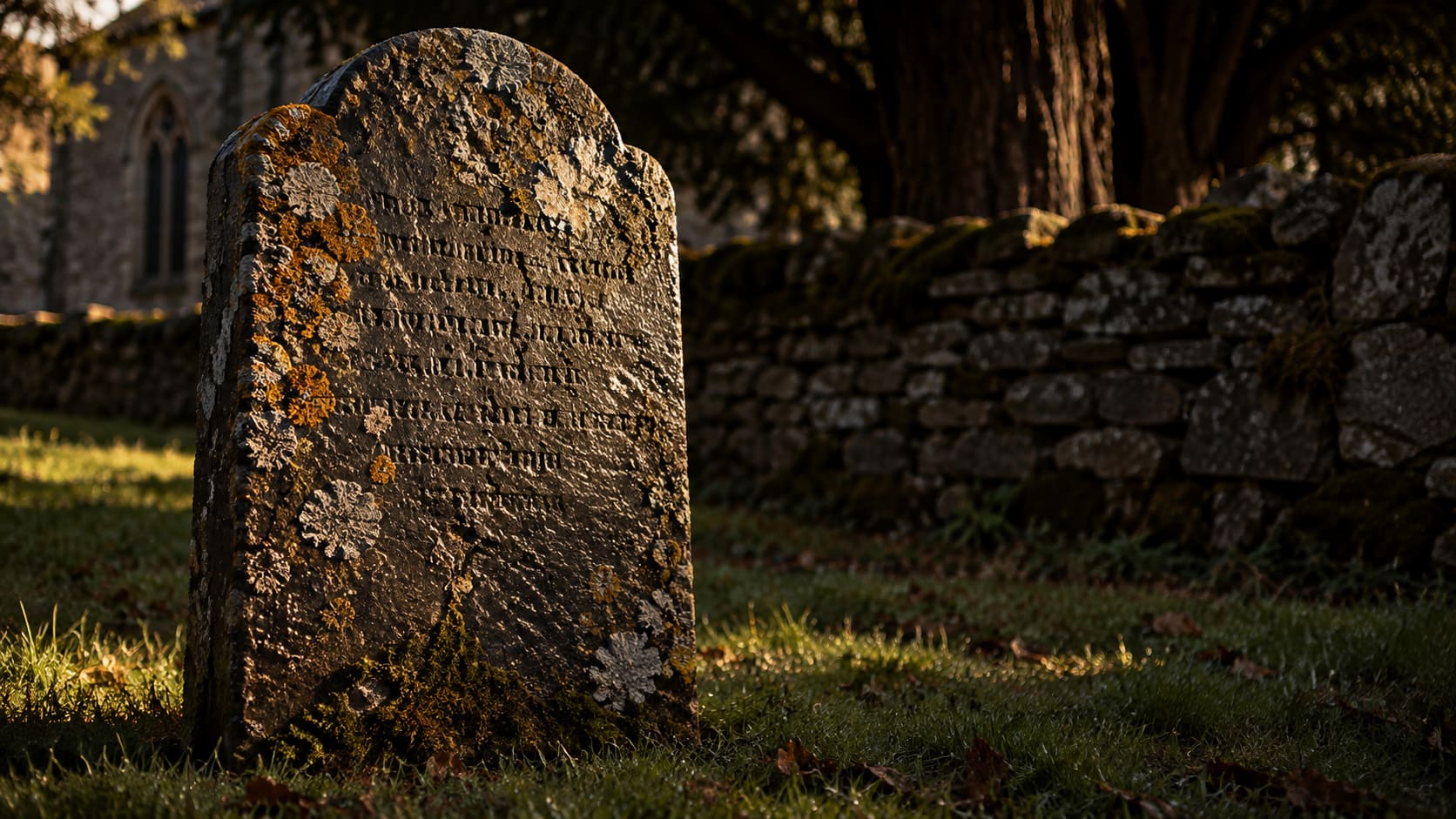
Lichen is the exception that catches people. It looks like a stain and behaves like a plant, sending threads into the stone, and pulling or scraping it tears the surface away with it. Treat lichen with the biological cleaner and leave it alone. It dies, dries, and sheds on its own over the following months.
Old stones also deserve a photograph before you start, taken in raking light, so the inscription is recorded even if the cleaning reveals more loss than you expected. If you are unsure whether a stone is too fragile, the answer is that it is.
Stubborn Problems: Black Crust, Lichen, Rust and White Haze
Black crust that will not lift. The black film on most stones is biological growth, and it responds to a biological cleaner given time, not pressure. In a polluted urban cemetery the black can instead be gypsum crust bonded to the stone, and that is conservator work. If two treatments and two months of weather have not moved it, stop and call one.
Green or grey lichen. Never scrape. Apply the cleaner, rinse, and wait. Lichen can take a full season to shed.
Rust stains. Rust usually comes from an iron pin, a bronze plaque’s fastener, or a nearby fence. Clean water and a soft brush lift surface rust; the deep orange stain needs a poultice, and the wrong poultice etches marble. Fix the source of the iron first, or the stain returns.
White haze on dark granite. Almost always cleaner or mineral residue that dried on the polish. Re-wet, rinse hard with clean water, and towel dry. Do not reach for a stronger product.
Paint and spray paint. Vandalism on a stone is a job for a conservator and a police report, in that order. Solvents that lift paint also pull it deeper into porous stone.
Heavy moss. Lift the thick pads by hand and with the plastic scraper, then treat the stone underneath with the cleaner. Moss holds water against the surface and is the main reason stones spall in winter, so it is worth removing even when it looks harmless.
Kit or Service: Which One Fits Your Situation
The honest answer to “should I clean it myself” depends on where you are, what the stone is made of, and what it means to you to be the one holding the brush. Two situations point clearly in each direction.
The kit is the right call when the stone is local, it is granite or sound marble, the growth is ordinary algae and dirt, and part of what you want is the hour at the grave itself. A quart of cleaner and a soft brush will keep a family stone readable for years at a cost of a few dollars per visit. For a veteran’s marker in a national cemetery, check first; the VA maintains those, and family cleaning rules vary by cemetery. The Military and Veteran Resources hub covers the VA headstone and marker programs.
A professional headstone cleaning service is the right call when the stone is hours or states away, when it is an upright monument you cannot safely reach the top of, when it is marble or sandstone that is already flaking, when lichen or black crust has been building for decades, or when you are reading this at midnight because you cannot face the cemetery yet and the stone still needs tending. Memorial Merits vetted Tending for exactly that reader: a nationwide grave care service that cleans in all 50 states, sends before-and-after photos, holds a 4.8 out of 5 on Trustpilot across 68 reviews, carries $2 million in liability insurance, and was recognized with the 2026 ICCFA Keeping It Personal award. A single flat-marker cleaning runs $139, an upright monument $199 to $225, restoration $159, and an ongoing care plan for an upright stone with grounds tending runs $388 a year, with a three to five week turnaround from order to photos. The exclusive Memorial Merits Tending coupon code is MEMORIALMERITS, worth 5 percent off. The full Tending review covers what the visit includes and what it does not.
|
When You Cannot Be There
Someone Careful, at the Grave, With Photos Back to You
Tending sends a trained crew to the cemetery in any of the 50 states, cleans the stone the same way this guide describes, and sends before-and-after photos within three to five weeks. Flat marker cleaning from $139, uprights from $199. The exclusive Memorial Merits Tending coupon code is MEMORIALMERITS, 5 percent off.
Check Grave Care Pricing
Trustpilot 4.8 from 68 reviews, $2 million insured. See the full Tending review.
|
What does headstone cleaning cost?
Doing it yourself costs $20 to $50 for cleaner that lasts several visits, or about $90 for a complete kit. A professional single cleaning in 2026 runs $139 to $225 depending on the marker size through Tending, and local monument companies quote in a similar range, often with a travel minimum. Restoration work such as re-leveling, re-setting, or re-cutting letters is priced separately and usually starts in the low hundreds. When the second date needs to be added, or the stone itself needs replacing, the numbers move into a different range entirely; the 2026 headstone cost breakdown has engraving, foundation and installation fees by marker type.
Cemetery Rules, Permission and the Best Time of Year
Ask before you clean. Most cemeteries welcome families caring for their own stones, and many keep a written policy that names approved cleaners and bans pressure washers outright. A national cemetery, a historic cemetery, or a churchyard may restrict cleaning to staff or trained volunteers. The VA’s own instruction sheet makes obtaining permission from the landowner the first step, before the first bucket is filled. Memorial Merits keeps a state by state funeral and cemetery directory if you need a cemetery office number.
Late spring through early fall is the cleaning season. The stone must be above 40 degrees, and the biological cleaner needs weeks of sun and rain afterward to finish. Cleaning in late October means the growth dies but sits on the stone all winter. Never clean when a freeze is expected within 48 hours; water in the pores expands as it freezes and pops the surface.
One cleaning a year is plenty for most stones, and once every two or three years for a sound granite marker in a dry climate. Between cleanings, keep grass trimmed back from the base and lift off leaves, which is most of what keeps a stone clean. If the visit itself is what you are looking for reasons to make, the memorial ideas directory has more ways to keep a place tended than a brush.

Recommended Products and Services at a Glance
Everything named in this guide, in one place, with what each is for and what it costs as of September 2026.
|
Headstone Cleaning Products and Services, September 2026 Prices
|
Headstone Cleaning Questions Families Ask

|
As Featured In
CBS · ABC · Fox · AP · Business Life Magazine · The New York Telegraph · Insider Weekly · Tampa Bay Observer · Benzinga · SociologyGroup.com · Animal Hospice Group · MemoriaSky.com
Member in the Spotlight, Home Funeral Alliance · Cake.com Professional Directory · Cited by Google AI Overviews
|