
Category: Probate and Estate Administration
-

Personal Representative Deed 2026: What It Is, Who Signs It
A personal representative deed is how estate real estate leaves the estate, whether it is sold to a buyer or handed to an heir. It answers to four different names depending on where you live, and in most states the personal representative can sign it without asking a judge for permission. The deed is not…
-
Survivorship Deed 2026: How It Works and Who Should Use One
A survivorship deed puts two or more names on a property so the survivor takes the whole thing automatically, with no probate and no court date. What almost nobody tells you is how easily it comes undone: Ohio law converts it to a tenancy in common the day a marriage ends, and a court-validated creditor…
-
Affidavit of Death 2026: Which One You Need and How to File
Five different documents are called an affidavit of death, and picking the wrong one wastes a trip to the recorder. This guide sorts them by the asset you are moving, names the free source in your own county before any paid one, and walks the form field by field. It also covers the second California…
-
Certificate of Trust 2026: What a Bank Can and Cannot Ask
A bank clerk asks you to prove you can act for your trust, and you do not want to hand over a document naming every beneficiary and every dollar. That is what a certificate of trust is for. What it must contain, who has to sign it, whether it needs a notary, and what a…
-
Affidavit of Heirship 2026: Who Signs It and What It Costs
Chapter 203 of the Texas Estates Code calls it nonjudicial evidence of heirship, and the name is the warning: it records who the heirs are, it does not move title, and it does not cut off an omitted heir. Here is the statutory form field by field, the separate version for a vehicle, and what…
-
Affidavit of Domicile 2026: What It Is and Where to Get One
A transfer agent has to know which state may tax an estate before it releases stocks or bonds, and the affidavit of domicile is the sworn statement that settles it. Here is the institution behind the request, the version your state uses, and a field by field walkthrough.
-
What Happens If You Die Without a Will? Who Inherits in Every State
A relative just told you who gets everything, and they sounded certain. Every state has a written answer for exactly this situation, and most families are surprised by it. Find your state’s rule, what it means for a spouse and children, and the statute it comes from.
-
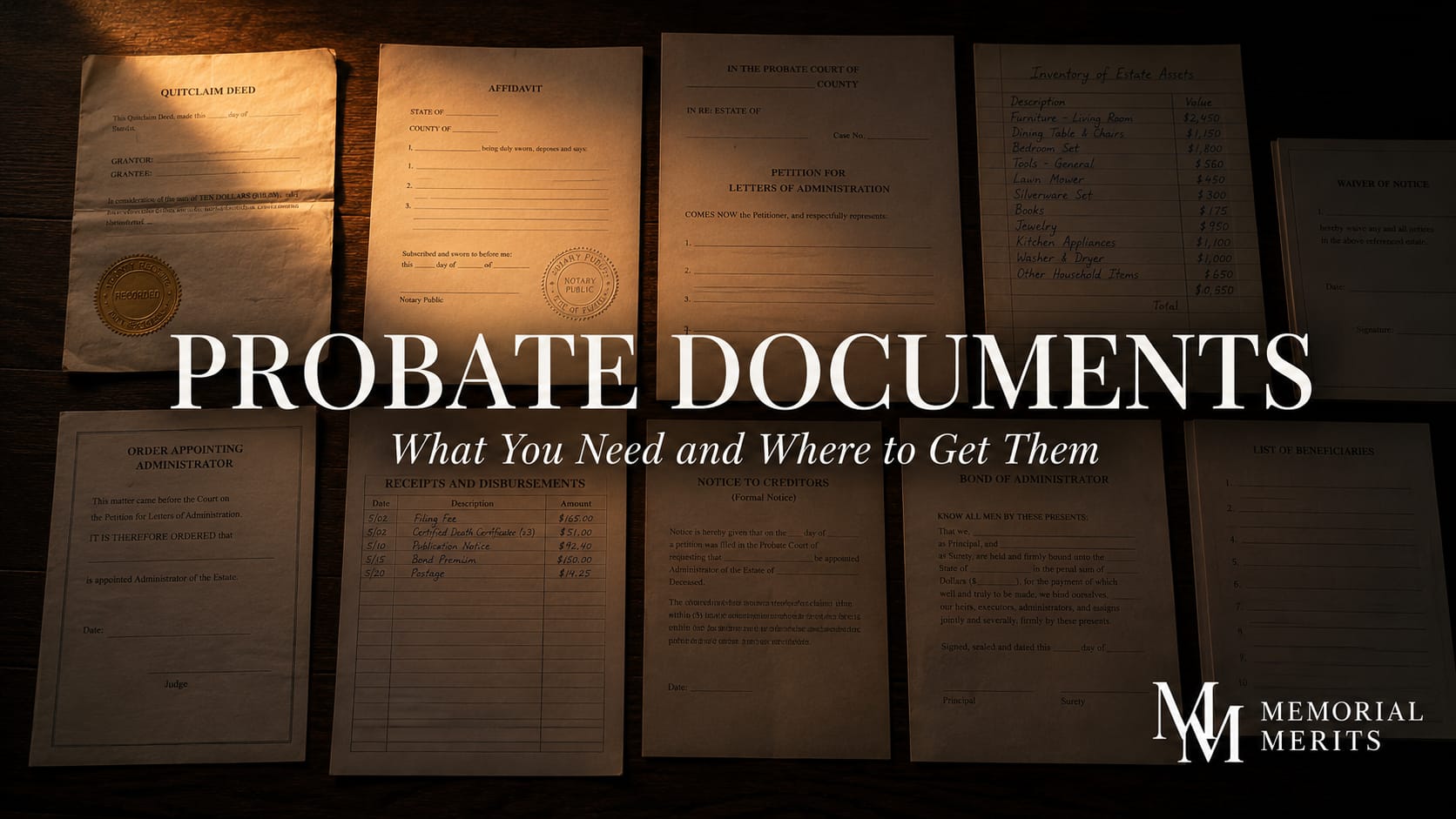
Probate Documents and Forms: What You Actually Need in 2026
A bank, a brokerage, or a court clerk has handed you a word you have never heard. This is the full list of documents an estate needs, what each one does, where your state publishes the free ones, and which ones no court will ever give you.c
-
Letters of Administration: Who Qualifies in Your State
When someone dies without a will, the court decides who gets appointed administrator, and state law sets the order. Most states require a bond, and Ohio bars anyone living out of state from serving at all. Find out where you rank before you file anything.
-
Transfer on Death Deed: Forms and Rules in Every State (2026)
A single recorded document can pass your home straight to the person you name, with no probate case at all. Thirty four states plus Washington, DC accept a transfer on death deed, sixteen states still refuse them, and Maryland joined the list on October 1, 2026. Here is where your state stands.
-
Letters Testamentary: How to Get Them in Every State (2026)
Somewhere between the funeral and the first phone call to the bank, a family gets told they need letters testamentary. Here is what they are, how to get them, what your state’s probate court charges to open an estate, and how to tell whether your family needs them at all.
-

What Happens to Credit Card Debt When You Die? Who Pays and What to Do
Credit card debt usually becomes a claim against the deceased person’s estate, but joint account holders, co-signers, and some surviving spouses may still be responsible. Learn what executors and families should do next.
-
What Happens to Debt When Someone Dies? Who Pays by Debt Type and State
When someone dies, their debts usually become claims against the estate rather than the personal responsibility of children or other relatives. Learn who may have to pay credit cards, medical bills, mortgages, loans, and other debts, plus how account ownership and state law can change the answer.
-
Life Insurance on Someone Else: What Insurable Interest Means for Your Family
Insurable interest determines who you can get life insurance on and who you cannot. This guide explains the rules in plain language for unmarried partners, divorced co-parents, adult children insuring aging parents, blended families, and small business partners, including the workarounds and conversation strategies nobody else covers.
-

How Many Death Certificates Do You Need? A Certified Copy Guide for Executors
Most families order three death certificates and run out within two weeks. This guide covers how many you actually need, what they cost, who can request them, and how to avoid delays that stall estate settlement.
-
When Siblings Fight Over Special Needs Inheritance: The Disasters Courts See Every Year (And How Parents Prevent Them)
Healthy siblings resenting special needs siblings over inheritance isn’t rare, it’s predictable when parents don’t address it. These are the court cases, trust challenges, and family destructions that happen when you assume love conquers financial inequality.
-
Blended Family Estate Planning When One Child Has Special Needs: 7-Step Plan to Protect Everyone (Without Starting a Family War)
When blended families include a special needs child, estate planning becomes legally complex and emotionally explosive. This 7-step framework prevents inheritance battles, protects government benefits, and ensures lifetime care without sacrificing your other children’s futures.
-
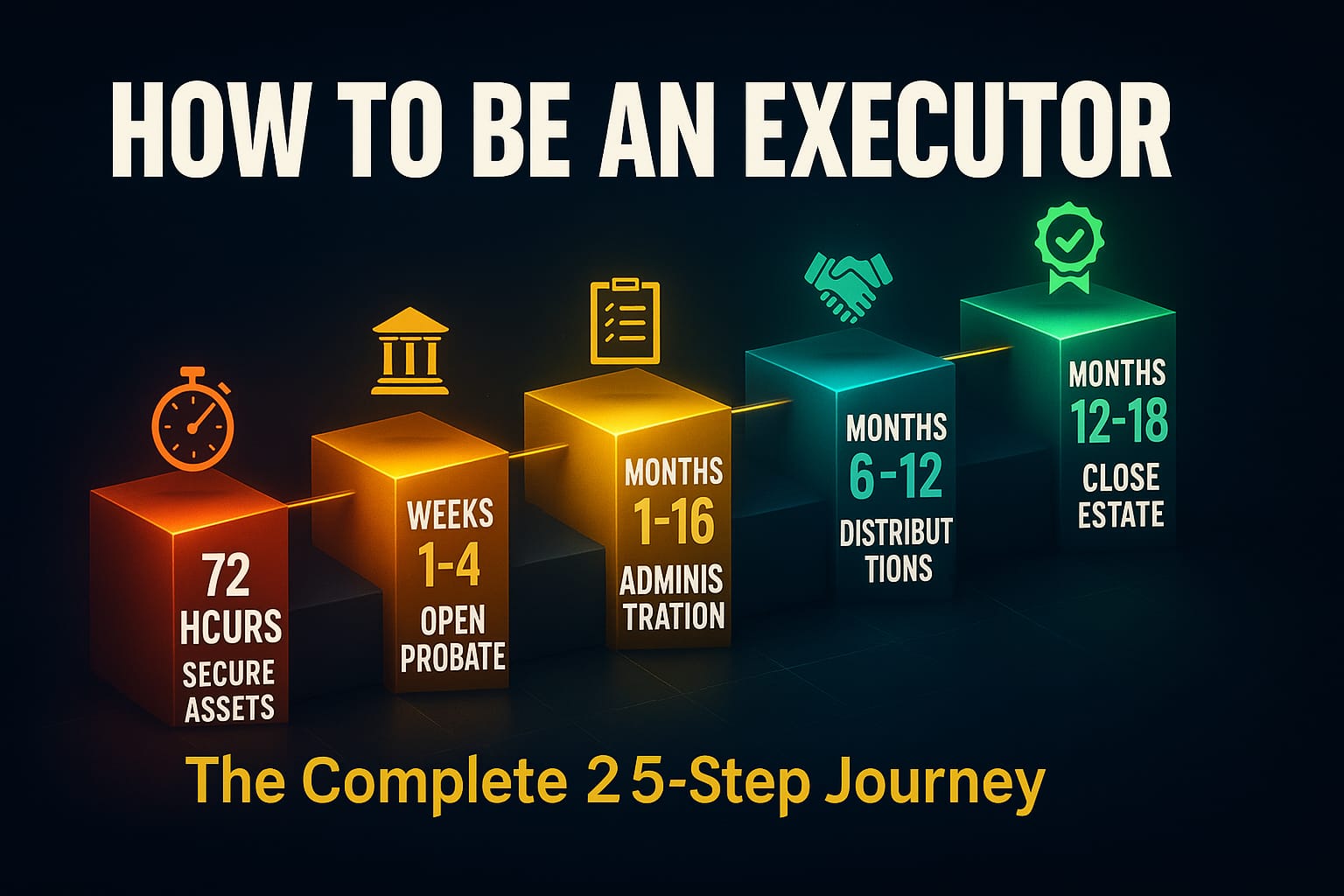
How to Be an Executor: Complete Step-by-Step Guide From Appointment to Distribution
Comprehensive chronological guide walking you through every stage of serving as executor, from initial appointment through final distribution. Learn the exact steps, timelines, decision points, and common mistakes to avoid at each phase of estate administration.
-
Do Executors Need a Probate Lawyer? When Going Without a Probate Attorney Becomes Dangerous
Not every estate needs an attorney, but most do. Simple estates under $500,000 with clear wills and straightforward assets might be safe for DIY administration. But estate tax requirements, business interests, real estate in multiple states, will contests, or creditor disputes require professional help.
-
The Executor Errors You Can’t Undo: Costly Mistakes That Become Your Financial Problem
Some executor mistakes you can fix with amended filings or apologies. Others are permanent. Paying beneficiaries before creditors, missing tax deadlines, selling assets without authorization, destroying property before inventory, and self-dealing create personal liability that lasts years beyond estate closure.
-
Digital Executor Duties Nobody Prepared You For: Crypto, Cloud Accounts & Social Media Access Laws
Traditional executor guides focus on bank accounts and real estate, ignoring the digital assets that now comprise significant portions of estates. Cryptocurrency wallets, cloud storage with irreplaceable family photos, social media accounts, NFTs, and password-protected online businesses create executor duties nobody teaches you about. Without proper legal authority and technical knowledge, executors lose access to…
-
What Executors Get Sued For: Personal Liability That Outlasts Estate Closure
Most executors think their legal responsibility ends when the estate closes. The truth is far more unsettling. Personal liability for fiduciary breaches, unpaid taxes, and creditor violations can follow you for years after probate ends, turning an act of service into financial devastation.
-
Executor Compensation: The Money You’re Legally Entitled To (That Families Never Discuss)
Most executors never take compensation because families don’t discuss it beforehand. Understanding your legal right to executor fees, state-specific payment structures, and tax implications protects both you and the estate from resentment and financial mistakes.
-
Being Named Executor: Complete Guide to Legal Duties, Timeline & Protecting Yourself from Personal Risk
Being named executor isn’t a simple honor—it’s accepting personal financial liability, 100-500 hours of legal work over 6-18 months, and responsibilities that can cost you tens of thousands from your own pocket if mistakes are made. Before you say yes, understand what you’re actually signing up for, how to protect yourself from liability, and whether…














Popular Posts
- Companion Urns for 2 Adults: How to Choose the Right Double Urn
 Companion urns for 2 adults need about one cubic inch of capacity per pound of body weight, so two adults at 180 and 160 pounds call for roughly 340 cubic inches. Compare shared, divided and side by side designs in ceramic, wood, marble, bio and metal.
 - How to Write a Will Without a Lawyer: What Makes It Legal in 2026A will written without a lawyer is legal in all 50 states. Here is what makes it valid, the five mistakes that wreck one, and which route fits your situation.
- Cremation Jewelry Made in the USA: How to Choose a True Heirloom PieceCremation jewelry made in the USA runs from plated keepsakes to solid gold and platinum heirlooms. Learn what the label should mean, how sealed and refillable chambers differ, and when a Lee Alexander piece is worth the investment.




Archives
- September 2026 (5)
- August 2026 (16)
- July 2026 (4)
- June 2026 (4)
- May 2026 (3)
- April 2026 (11)
- March 2026 (7)
- February 2026 (13)
- December 2025 (4)
- November 2025 (18)
- October 2025 (14)
- September 2025 (3)
- August 2025 (7)
- June 2025 (4)
- April 2025 (2)
- December 2024 (2)
- October 2024 (3)
- September 2024 (1)
- August 2024 (2)
- July 2024 (6)
- June 2024 (2)
- May 2024 (5)
Tags
affordable funeral options casket comparison casket prices cremation cremation jewelry cremation options crypto estate planning Digital Assets digital estate planning digital legacy planning direct cremation discount caskets End-of-life planning estate administration estate planning executor duties executor personal liability family legacy final wishes FTC funeral rule funeral costs funeral expenses funeral planning funeral planning guide Green Burial grief counseling grief support guaranteed issue life insurance headstones and monuments legacy journal legacy planning legal help after death life insurance living will memorial jewelry memorial service obituary pet cremation Pet Grief Pet loss pet memorial power of attorney Probate probate court urns