
Home > Free Resources > Grief Support Downloads
Grief Support Downloads
Everything on this page is free to download, print, and share with anyone who needs it. These guides, trackers, journal prompts, and workbooks cover the emotional, practical, and physical dimensions of grief. Whether you’re navigating your own loss, supporting someone who is, caring for a loved one at end of life, or grieving an animal companion, these resources were built to meet you where you are.
Distribution & Usage Rights
Every resource on this page is free to use, print, share, and redistribute. Therapists, counselors, hospice workers, funeral directors, attorneys, financial planners, and faith leaders are welcome to print copies for clients, include them in packets, or distribute at workshops. Websites and organizations may host, embed, or republish these documents. Friends and family can photocopy and share freely. The only thing we ask is that Memorial Merits branding and links remain intact. No fees. No permission needed. No login required. Ever. These resources are educational tools, not legal, financial, or medical advice. Always consult a qualified professional for decisions specific to your situation.

Grief Coping & Tracking
Grief doesn’t follow a straight line, and what helps one week may not help the next. These resources give you tools to track what you’re experiencing, identify when professional support might help, and build coping practices grounded in actual research rather than platitudes.
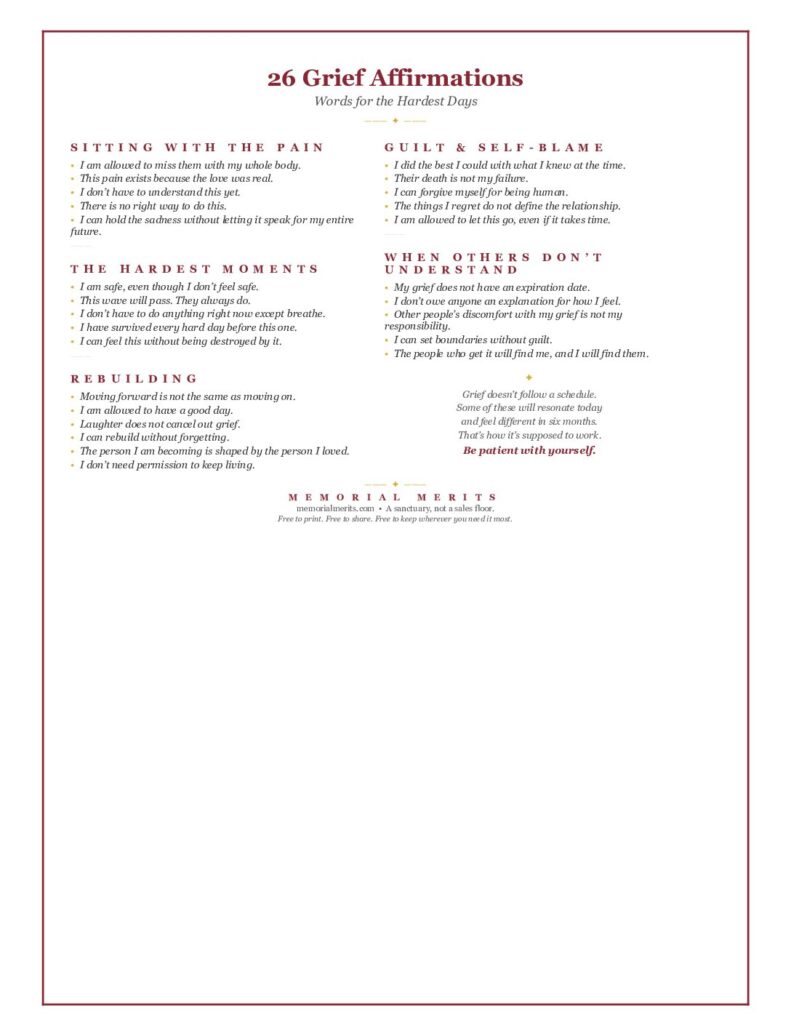
Grief Affirmations Reference Sheet
Twenty-six affirmations organized by five emotional experiences based on the Dual Process Model of grief and backed by peer-reviewed neuroscience research on self-affirmation. Not a generic motivational list. Each affirmation maps to what bereaved individuals actually go through: acute pain, guilt and regret, identity disruption, moving between grief and daily life, and gradual meaning-making. Print it, tape it somewhere visible, and revisit it as your grief shifts over time.

Grief Symptom Tracker: When to Seek Help
Grief affects your sleep, appetite, concentration, motivation, and body in ways most people don’t expect. This tracker helps you log daily symptoms over time so you can spot patterns, identify triggers, and recognize when normal grief may be crossing into something that needs professional support. Includes guidance on the difference between typical grief responses and signs of prolonged grief disorder.
Navigating Grief in Daily Life Planning Guide
Bills don’t stop. Work doesn’t stop. Parenting doesn’t stop. This guide addresses the reality that most grieving people can’t pause their lives to grieve properly. Covers practical strategies for managing responsibilities while processing loss: workplace communication, energy budgeting, asking for help, handling grief triggers in public, and giving yourself permission to function at less than full capacity without guilt.
Grief Tracker Journal Prompts
Journaling is one of the most effective tools for processing grief, but staring at a blank page when you’re already emotionally depleted doesn’t help. These prompts give you a starting point on days when you need to get something out but don’t know how to begin. Covers the full range of grief: anger, sadness, gratitude, confusion, guilt, memory, and the strange in-between days where you feel nothing at all.
The 5 Stages Everyone Gets Wrong
The Kubler-Ross model is the most widely known framework for grief, and also the most widely misunderstood. It was never meant to describe a linear progression. This guide explains what the original research actually said, how the stages have been misapplied by popular culture, why your grief doesn’t need to follow a sequence to be valid, and what modern grief psychology says about how people actually process loss.
Caregiver & Family Support
Supporting someone through grief or end-of-life care takes a toll that most people underestimate. These resources are for the people standing beside the person in crisis, not just the one in it.
Anticipatory Grief Caregiver Workbook
Grieving someone who is still alive is one of the most isolating experiences a person can face. This workbook is for caregivers of terminally ill loved ones who are experiencing anticipatory grief while simultaneously managing medical decisions, family dynamics, and their own emotional and physical depletion. Covers self-care strategies, boundary setting, communication tools, and when to accept that you need help too.
Supporting Someone Grieving Checklist
Most people want to help a grieving friend or family member but don’t know how. This checklist covers what actually helps versus what people think helps: specific offers instead of “let me know if you need anything,” showing up after the first two weeks when everyone else disappears, what to say and what to never say, and practical actions like meals, errands, and just being present without trying to fix it.
Age-Specific & Seasonal
Grief looks different at different ages and hits harder at certain times of year. These resources address the specific challenges of helping children understand loss and navigating holidays when someone is missing from the table.
Age-by-Age Grief Guide
A child’s understanding of death changes dramatically between ages three and eighteen, and the support they need changes with it. This guide breaks down grief responses and support strategies by developmental stage: toddlers, preschoolers, early elementary, tweens, and teenagers. Covers what each age group understands about death, how they typically express grief, warning signs to watch for, and what adults can say and do that actually helps.

Holiday Healing Gift Guide
The holidays are brutal for grieving people, and most gift guides ignore that entirely. This one doesn’t. Every suggestion is chosen for someone navigating their first (or fifth) holiday season with an empty chair at the table. Covers comfort items, remembrance gifts, self-care packages, memorial ornaments, and experience gifts that acknowledge the loss rather than trying to paper over it with forced cheer.
Pet Loss
Losing an animal companion is real grief, and dismissing it as “just a pet” is one of the most damaging things our culture does to people in pain. These resources treat pet loss with the seriousness it deserves.

Honoring Their Memory: A Family Guide to Pet Remembrance and Healing
Five family grief practices for after a pet’s cremation, including letter-writing prompts, a memory circle dinner table exercise, shadow box guidance, and a curated resource section covering urns, cremation jewelry, living memorials, and ash transformation. Free to download, print, and share with branding intact. No email required.
Losing a Family Pet: A Complete Guide to Cremation, Memorial Options, and Grief Support
From the first hours after loss through cremation options, ash disposition, memorialization, family sharing, and grief support. Includes an ash yield reference table by species, a legal overview of scattering and burial options, guidance for children, and a resource directory with QR codes. Free to download and share.

Horse Cremation Urns and Memorial Keepsakes: A Free Guide for Equine Families
Most horse owners are not prepared for what comes back after private cremation. A 1,000-pound horse can produce roughly 1,000 cubic inches of ash, and no standard urn holds all of it. This free 8-page guide maps the three paths equine families actually take, covers urns, cremation jewelry, and outdoor memorials honestly, and includes a full FAQ on ash volume, scattering, and long-term storage. Free to download, print, and share.
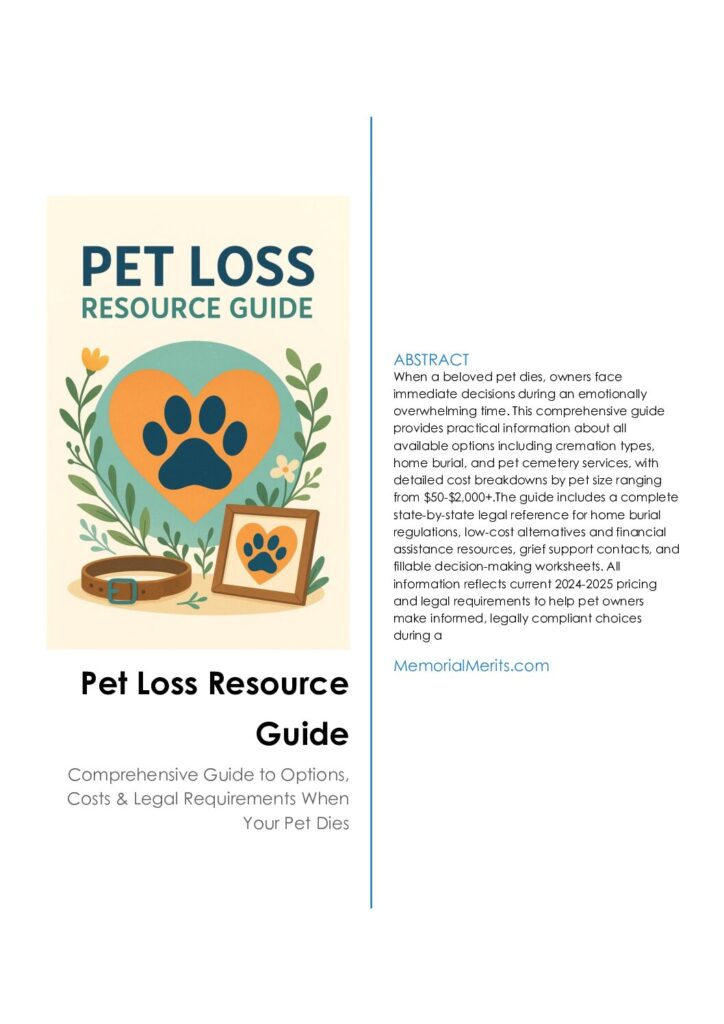
Pet Loss Resources Guide
A comprehensive guide for pet owners navigating the loss of an animal companion. Covers immediate coping strategies, memorial and remembrance options, when and how to talk to children about pet death, support communities and hotlines, and the unique grief dynamics of losing a pet that was your primary source of companionship or emotional support. Includes links to vetted services for urns, keepsakes, and memorial products.
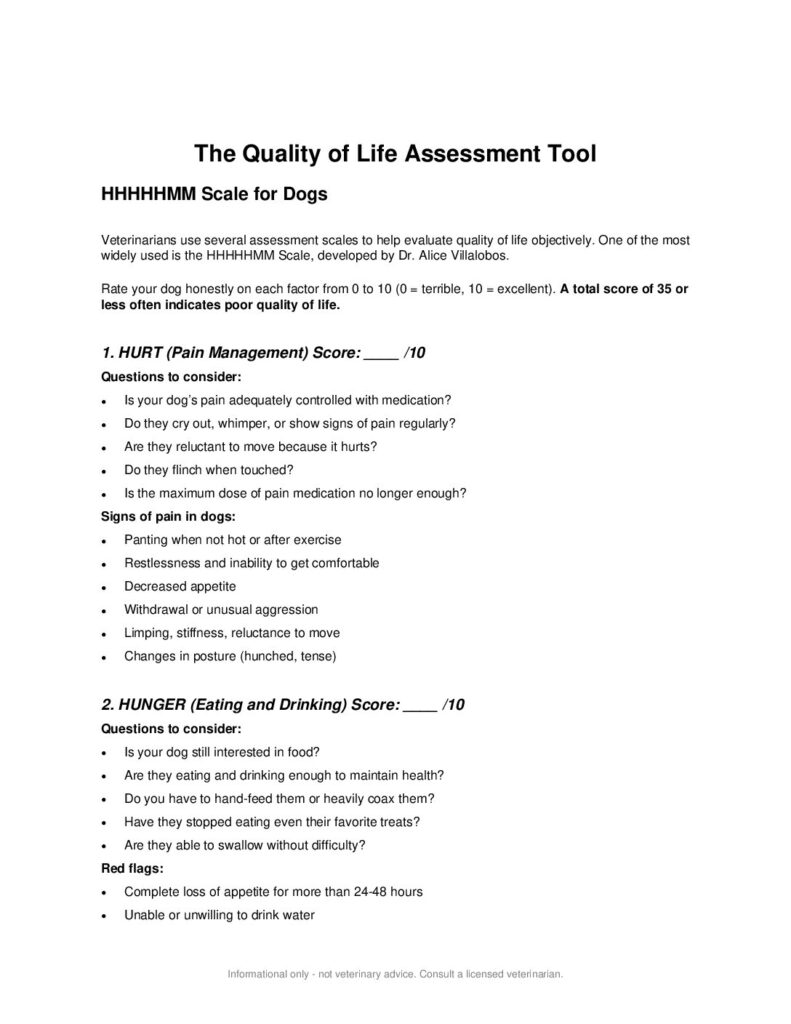
Quality of Life Assessment Tool for Dogs
The hardest decision a pet owner faces is knowing when it’s time. This assessment tool provides a structured, objective framework for evaluating your dog’s quality of life across multiple dimensions: pain levels, appetite, hydration, mobility, hygiene, happiness, and the ratio of good days to bad days. It won’t make the decision for you, but it replaces agonizing guesswork with a clear picture of where your companion actually is.